Introduction
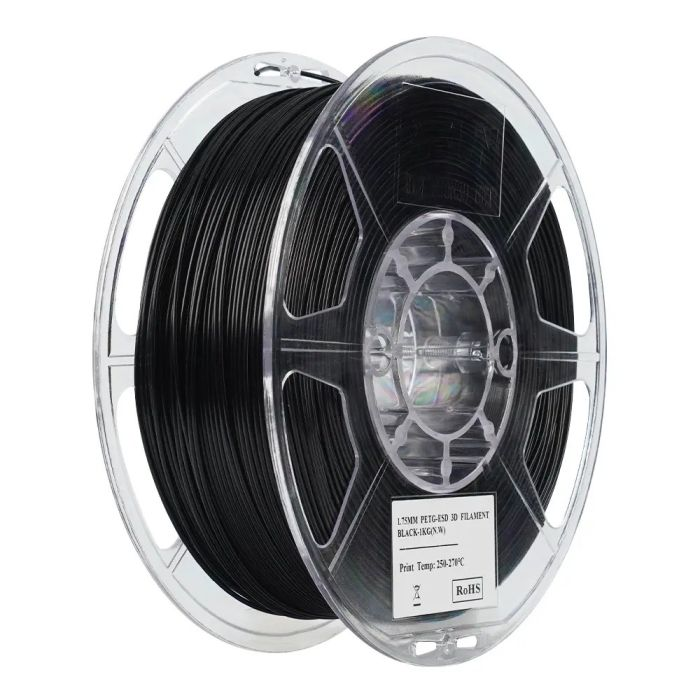
Choosing the right material is an important part of successful 3D printing. Whether you are creating functional parts, product prototypes, decorative objects, or everyday tools, the filament you use can make a major difference in the final result. PETG has become a popular choice among 3D printing enthusiasts, designers, engineers, and manufacturers because it offers a useful balance of strength, clarity, flexibility, and printability. It combines several advantages of commonly used printing materials while providing reliable performance for a wide range of applications. With the right PETG Filament, users can produce detailed models that look attractive and perform well under everyday conditions.
As 3D printing technology continues to improve, material quality has become just as important as printer performance. Manufacturers are developing advanced polymers that support better printing consistency, stronger parts, and more creative design possibilities. eSUN, a global provider of 3D printing materials, has more than 20 years of experience in high-performance polymer development. Its product portfolio includes FDM filaments, LCD photopolymer resins, and SLS powders for different printing needs. By focusing on research, innovation, and material standards, eSUN supports users who want dependable materials for both creative and practical projects. Understanding the benefits of PETG helps explain why this material continues to attract attention across the 3D printing industry.
Understanding What Makes PETG a Popular 3D Printing Material
PETG stands for polyethylene terephthalate glycol-modified, a thermoplastic material widely used in additive manufacturing. It is related to PET, a polymer commonly found in packaging and consumer products, but the addition of glycol changes its processing properties. This modification helps reduce crystallization during printing and makes the material easier to work with in many FDM 3D printers. As a result, PETG can produce durable parts with a smooth finish and attractive appearance. Its combination of strength and flexibility makes it suitable for projects that require more than simple decorative features.
One reason PETG Filament has gained popularity is its balanced performance. PLA is often selected for its ease of printing, while ABS is known for its heat resistance and toughness. PETG offers a practical middle ground, providing good layer adhesion, impact resistance, and less brittleness than many standard PLA materials. It can also handle moderate environmental exposure, making it useful for functional prototypes and household components. These characteristics allow designers to explore different applications without immediately moving to more demanding engineering-grade materials. For beginners and experienced makers alike, PETG provides an accessible option for producing useful 3D printed objects.
Strength and Durability for Functional 3D Printed Parts
Strength is one of the most important reasons people choose PETG for practical printing projects. A finished component must often withstand handling, pressure, vibration, or repeated use. PETG has good impact resistance and toughness, which can help printed objects resist cracking when exposed to everyday mechanical stress. Its strong layer bonding also supports the production of parts with consistent structural performance when printing conditions are properly controlled. These properties make it a useful material for brackets, protective covers, equipment holders, storage components, and custom replacement parts.
However, the strength of a printed object depends on more than the material itself. Nozzle temperature, printing speed, cooling settings, infill percentage, wall thickness, and print orientation all affect the final result. For example, increasing the number of outer walls can improve the strength of certain components, while selecting a suitable infill pattern can provide additional internal support. PETG Filament performs best when users follow recommended printing settings and allow sufficient time for proper layer bonding. eSUN focuses on developing 3D printing materials that support reliable performance, helping users achieve consistent results across different applications. Testing the finished part under realistic conditions is still important when designing components for demanding environments.
Clarity and Appearance Expand Creative Possibilities
Strength is not the only advantage of PETG. Its appearance also makes it an attractive option for projects where visual quality matters. Transparent and translucent PETG materials can create interesting light effects, making them suitable for decorative models, display pieces, protective covers, and visual prototypes. Depending on the formulation and printing settings, users can achieve different levels of transparency, color depth, and surface appearance. This gives designers more freedom to create objects that combine practical functionality with an attractive finish.
Achieving clear results requires attention to several printing factors. Excessive cooling, unsuitable temperatures, poor layer bonding, and incorrect print speeds can affect the appearance of transparent models. Users may need to experiment with nozzle temperatures and cooling levels to find the right balance between surface quality and dimensional accuracy. The design itself also matters because thicker walls and carefully planned geometry can influence how light passes through the printed object. With quality PETG Filament, creators can explore transparent designs, colorful prototypes, and customized products while maintaining useful mechanical properties. This combination of visual appeal and functional performance makes PETG valuable for both professional and personal projects.
Printing Performance and the Importance of Material Quality
A reliable printing experience starts with consistent filament quality. Even a capable 3D printer can produce disappointing results when the material has uneven diameter, poor moisture control, or inconsistent formulation. PETG is hygroscopic, which means it can absorb moisture from the surrounding air. When wet filament enters a heated nozzle, it may cause bubbling, stringing, rough surfaces, or weak printed layers. Proper storage in a sealed container and drying when necessary can help protect material quality and improve printing results. Users should also check the manufacturer’s recommended temperature range before starting a new project.
Printer calibration is another important part of working with PETG. The correct nozzle temperature, bed temperature, retraction settings, and print speed can reduce common problems such as stringing and excessive material buildup. A clean build surface and suitable bed adhesion also help prevent unwanted movement during printing. eSUN brings extensive polymer experience to its 3D printing material development, supported by research and innovation activities across four R&D centers. The company has more than 90 R&D staff members and over 90 research patents, reflecting its focus on advancing material technology. Its experience in polymer production and modified materials supports a broad portfolio designed for different user requirements, from consumer printing to industrial applications.
Choosing Advanced PETG Filament for Different Applications
PETG is used in many areas because it offers a useful combination of durability, printability, and appearance. In product development, engineers can use it to create functional prototypes that help evaluate size, shape, assembly, and basic performance before moving to more expensive production methods. In workshops, makers can print tool organizers, protective housings, cable holders, and customized accessories. Small businesses can also use PETG for product samples, display components, and customized items. Its versatility allows users to move beyond decorative models and create objects that serve practical purposes.
Selecting the right PETG Filament depends on the requirements of the project. Some applications may prioritize impact resistance, while others need transparent finishes, dimensional accuracy, or attractive colors. Users should consider the intended environment, expected mechanical loads, operating temperature, and printer compatibility before choosing a material. eSUN serves customers in more than 100 countries and regions through its global distribution and marketing network. Since its establishment in 2002, the company has continued to invest in material innovation and digital manufacturing solutions. Its wider commitment to polymer research and industry standards helps support the changing needs of the global 3D printing community. Choosing a trusted material supplier can make it easier to find suitable solutions as projects become more advanced.
Conclusion
The combination of strength, clarity, and practical printing performance makes PETG an important material in modern 3D printing. It offers good impact resistance, strong layer adhesion, useful flexibility, and attractive visual possibilities. These qualities make it suitable for functional prototypes, customized accessories, protective components, display models, and many other applications. Although printing settings and moisture control play an important role in achieving good results, the right material can make the entire process more predictable and rewarding.
As the additive manufacturing industry continues to grow, dependable filament technology will remain essential for turning creative ideas into useful products. eSUN brings more than two decades of polymer expertise, global experience, and ongoing research to the development of advanced 3D printing materials. For users exploring durable and visually appealing printing solutions, PETG Filament offers an effective balance between everyday usability and creative freedom. With thoughtful material selection, proper printer settings, and attention to storage, PETG can help bring stronger, clearer, and more reliable 3D printed designs to life.

Humair is the founder of PeakMagzine.com and a seasoned digital strategist with over 15 years of SEO experience. He specializes in creating high-quality, optimized content that drives organic traffic, improves search rankings, and helps brands grow their online presence effectively.